CTSI
Cartesi (CTSI) allows developers to use the advantages of Linux and traditional software in the development of decentralized applications (dApps). With support for coding in Python, C++, and Rust, Cartesi doesn’t require developers to learn a new language to get into Web3. The main innovation here is having app-specific rollups with the Cartesi Virtual Machine, which allows complex tasks to be done outside but still protected by Ethereum’s ecosystem. Cartesi is developing the blockchain to include many new possibilities and use cases in AI, gaming, DeFi, and more.
How Does Cartesi Work?
To work, Cartesi uses optimistic rollups and a self-made Linux virtual machine called the Cartesi Machine. The system makes it possible for dApps to do many calculations away from the blockchain, while keeping the verification process on-chain. The developing team can engineer rollups depending on their particular application, boosting the performance that regular EVMs are not able to achieve. Cartesi dApps have the advantages of being trustworthy and having the power thanks to the smooth integration between off-chain and on-chain parts.
Cartesi and Other Cryptocurrencies
Where most platforms in the Blockchain industry are limited by the EVM, Cartesi does not have this constraint and relies on Linux. While Ethereum and Solana are made for all kinds of smart contracts, Cartesi wants to focus on supporting AI, physics in gaming, and the advancement of DeFi modeling. Instead of rivalling blockchain, it joins forces with it and adds its own contributions.
Technology Behind Cartesi
Cartesi’s core technology stack includes:
- Cartesi Virtual Machine: Allow the use of all the open-source technologies and tools available in Linux.
- App-Specific Rollups: Allows for personalization of rollups at the app level to help the app work better with higher volumes.
- RISC-V Architecture: Ensures verifiable and transparent computation.
- Abstraction Scalability: It is possible for developers to build even sophisticated dApps by not having to reinvent the wheel.
- Integration-ready Infrastructure: It uses Ethereum and pioneering DA, such as Celestia, to help build a web3 world.
The roadmap set out by Cartesi covers things like multi-dApp nodes, rollups running in browsers, and integrating with EigenLayer and Bitcoin.
Is Cartesi a Good Investment?
The business merges the traditional software development system with blockchain infrastructure to bring something distinct. Being able to use it for AI, DeFi, and gaming dApps, three areas that are seeing great growth in Web3, is a strong point for many believers. Yet, it’s a new technology and must deal with the usual risks in the crypto industry and the struggle of adoption. It is important for investors to assess the unique aspect of the product and the challenges in the wider market and regulatory conditions.
Legal and Regulatory Considerations 2025
By 2025, Cartesi had adopted general cryptocurrency laws in countries across the world. Even though the security protocol is decentralized, all developers and users are expected to follow relevant laws on money movements, privacy matters, and use of AI technology. Those using Cartesi may have to follow strict guidelines when it comes to ensuring compliance and handling data, especially in the AI and DeFi business.
What are the ways to get and trade Cartesi?
It is possible to buy CTSI, Cartesi’s native token, on major crypto exchanges, like Binance, Coinbase, and Kraken. To buy:
- Go through the process of making and confirming an account on the exchange that you prefer.
- Deposit fiat or cryptocurrency.
- Search for CTSI and make an order to buy.
If you want, you have the option to transfer CTSI to your personal wallet.
Cartesi Wallets and Security
Cartesi tokens are compatible with ERC-20 standards, so they can be held in a variety of types of wallets.
- Hardware wallets: Ledger, Trezor
- Software wallets: MetaMask, Trust Wallet
- Web wallets: Coinbase Wallet, Binance Wallet
People who hold cryptocurrency in the long run are advised to opt for hardware wallets for top security.
What are the safety measures to take for Cartesi holdings?
To keep your CTSI secure:
- Keep your large reserve of coins in a hardware wallet instead of storing them online.
- Enable 2FA on exchange accounts.
- Ensure your private keys and recovery phrases are kept offline and not shared with anybody.
- Regularly update wallet software.
Be on the lookout for phishing scams and always double-check the links and URLs you get.
Cartesi Adoption and Use Cases
Cartesi allows developers to build different dApps without facing the limitations of the EVM. Real-world applications include:
- AI: There are LLMs that are decentralized and are trusted because they can verify their AI inferences (e.g. ChainGPT).
- Gaming: Examples are on-chain physics engines, massive multiplayer online games using blockchain (e.g., RIVES, Bubblewars).
- DeFi: Use AMMs and DCA tools that are advanced such as DCA.Monster.
- Identity and Social: Platforms, such as Peeps, which operate through a decentralized way and with verifiable techniques.
- Art and Dev Tools: Examples of such platforms are Drawing Canvas and Bug Buster.
Cartesi and Its Foreseen Future and Potential
The idea of Cartesi could revolutionise how developers engage with Web3. The plan for this technology includes support for browser-based rollups, tie-ins with Bitcoin, and use by numerous DA layers. Algorithmic AI applications need more computing resources, and Cartesi is well prepared to meet this need. Continued growth in the ecosystem, more real-world uses, and interest from developers all suggest that it could grow a lot.
Advantages and Disadvantages of Putting Money into Cartesi
Pros:
- Full Linux environment for developers.
- Individual rollups can help improve scalability and allow more control.
- AI is applied in gaming, DeFi, as well as other domains.
- Ability to connect and communicate with Ethereum and other types of chains.
- The technical progress and management are both planned and governed.
Cons:
- With considerable newness to it, this industry carries a certain amount of uncertainty.
- It has tough competition from different Layer-2 services.
- A lack of regulation, especially with regards to AI and DeFi.
- Dependence on the technology and plans found in Ethereum.
Final Thoughts
Cartesi represents a huge progress in decentralized computing, since it brings together software engineering and blockchain. The mix of Linux and off-chain computation helps to unlock new and innovative ways to build apps and interact in Web3. Due to the growth of need for efficient and practical applications, the Cartesi solution could create the groundwork for the market. Since it is still a work in progress, its potential is interesting and warrants observing.
Latest News in CTSI
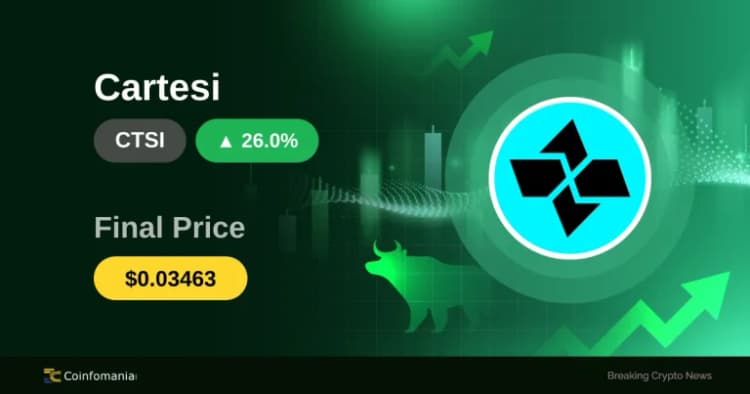
Massive Surge — CTSI Skyrockets 26% in Just 30 Minutes
CTSI's recent price surge of 26% in just 30 minutes raises questions about the underlying market dynamics.

Vandit Grover
Author
Cetus Protocol Upgrades Terminal with Modular Design for Seamless Integration

Hanan Zuhry
Author