How Exchange Outages and Trading Halts Impact Market Sentiment and Short-Term Prices
Exchange outages and trading halts disrupt crypto markets by distorting liquidity, intensifying volatility, and damaging trust, shaping short-term price action and trader sentiment during high-stress market conditions.
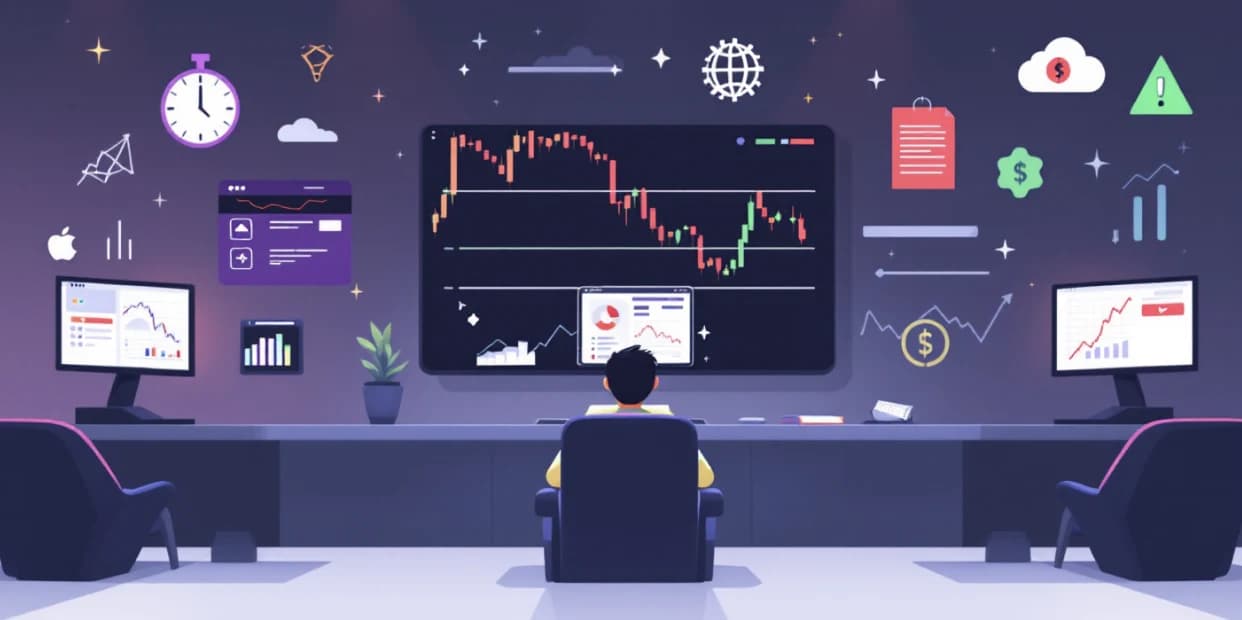
When traders search for the best crypto trading platform, they usually focus on fees, liquidity, asset selection, and interface design. Reliability often comes later, until something goes wrong. Exchange outages and trading halts are among the most disruptive events in crypto markets, not because they change fundamentals, but because they directly interfere with access, execution, and trust. In a market that runs 24/7 and reacts instantly to information, even short interruptions can ripple outward, shaping sentiment and price action in ways that are often underestimated.
Crypto markets are uniquely sensitive to infrastructure failures. Unlike traditional finance, where trading pauses are expected and regulated, crypto operates continuously across global venues. When one major exchange goes offline or halts trading during periods of volatility, the effects are immediate and measurable.
Why Outages Matter More in Crypto Than in Traditional Markets
Crypto markets are highly fragmented but also deeply interconnected. Prices across exchanges tend to move in sync because arbitrage traders keep markets aligned. When a large exchange experiences an outage, that synchrony breaks down.
Liquidity does not disappear, but it becomes unevenly distributed. Traders who rely on the affected platform lose the ability to act, while others continue trading elsewhere. This imbalance creates short-term distortions in price discovery. Assets may trade at premiums or discounts across venues, and volatility often increases as order books thin.
Unlike stock exchanges, crypto platforms are not required to coordinate halts or publish standardized outage procedures. Each exchange decides independently when to pause trading, limit functionality, or resume operations. This lack of uniformity amplifies uncertainty. Traders are left guessing whether a halt is technical, risk-related, or triggered by internal safeguards.
In fast-moving markets, uncertainty itself becomes a catalyst.
The Immediate Impact on Price Action
When an exchange goes down during a major market move, price reactions often intensify rather than stabilize. Traders locked out of their accounts cannot place protective orders, exit positions, or provide liquidity. Meanwhile, activity shifts to other platforms, where order books may not be deep enough to absorb sudden surges in demand or supply.
This dynamic often results in sharp wicks, sudden spikes, or abrupt drops that are later retraced once normal trading resumes. These moves are not driven by new information, but by structural imbalance.
Trading halts can have a similar effect. When trading on a specific asset is paused, anticipation builds. Once trading resumes, pent-up orders hit the market at once. Depending on sentiment, this can lead to exaggerated breakouts or breakdowns in the first minutes after reopening.
Short-term traders pay close attention to these moments because they often define intraday highs and lows.
Sentiment Damage and the Trust Factor
Beyond immediate price movement, outages damage confidence. Trust is a fragile commodity in crypto, and reliability plays a central role in how platforms are perceived.
Even if funds are safe and no data is compromised, users remember the inability to act. The psychological effect is significant. Traders do not just evaluate markets; they evaluate whether they can participate when it matters most.
Repeated outages or poorly communicated halts tend to create negative sentiment around an exchange. Users may reduce exposure, withdraw funds, or diversify activity across platforms. Over time, this behavior affects liquidity, which in turn influences spreads, execution quality, and volatility.
Sentiment shifts are rarely visible on charts immediately, but they shape medium-term behavior. Markets remember infrastructure failures longer than most news headlines.
The Role of Communication During Disruptions
How an exchange communicates during an outage often matters as much as the outage itself. Clear, timely updates can prevent panic. Silence or vague explanations do the opposite.
In crypto, information moves quickly through social media, forums, and messaging platforms. When official communication lags, speculation fills the gap. Users begin to assume worst-case scenarios, including insolvency or security breaches, even when none exist.
This rumor-driven environment can spill over into broader market sentiment, especially if the affected exchange has a significant market share. Prices may move not because of confirmed facts, but because of perceived risk.
Exchanges that prioritize transparency during disruptions tend to recover trust faster. Those who do not often face prolonged skepticism.
How Trading Halts Shape Short-Term Behavior
Trading halts are sometimes implemented to manage extreme volatility, system overload, or risk exposure. In theory, they are meant to protect users and infrastructure. In practice, they often create strategic behavior.
Traders anticipate halts during high-volatility events and adjust positioning accordingly. Some reduce leverage or move funds preemptively. Others attempt to front-run reopening moments, placing orders elsewhere or preparing for rapid execution once trading resumes.
This anticipation itself affects prices. Markets may accelerate moves ahead of expected halts, especially if traders believe access will be restricted. Once trading resumes, volatility often spikes as delayed reactions converge.
In short-term markets, timing is everything. Halts compress time and amplifies reactions.
Arbitrage, Liquidity Migration, and Market Fragmentation
Outages and halts also highlight the importance of arbitrage. When one exchange goes offline, arbitrage paths are interrupted. Price differences persist longer than usual because fewer traders can exploit them.
Liquidity migrates quickly to operational venues, but not always smoothly. Smaller exchanges may struggle to handle sudden volume increases, leading to slippage and execution issues. Larger platforms absorb more flow, but even they can feel strain during major events.
This fragmentation challenges the idea of a single market price. During disruptions, there is no unified view of value, only a collection of localized prices reacting to limited information.
For short-term traders, these moments offer opportunity and risk in equal measure.
The Long-Term Implications for Exchanges
Infrastructure reliability has become a competitive differentiator. As markets mature, users expect platforms to perform under stress, not just during calm conditions.
Exchanges that invest in scalability, redundancy, and stress testing are better positioned to handle volatility spikes. Those who do not risk reputational damage that is difficult to repair.
Over time, repeated outages influence user behavior. Traders diversify across platforms, reduce reliance on single venues, and prioritize reliability over marginal fee differences. This shift gradually reshapes market structure.
In that sense, outages are not just technical events. They are market signals about which platforms can handle real-world pressure.
What Traders Can Learn From These Events
For traders, outages and halts offer important lessons. Relying on a single platform increases exposure to operational risk. Understanding how different exchanges behave during stress helps inform platform selection.
It also reinforces the importance of risk management. Stop losses, position sizing, and contingency planning matter even more in environments where access cannot be guaranteed.
Markets will always move. The question is whether participants can move with them.
Final Thoughts
Exchange outages and trading halts may seem like technical footnotes, but they play an outsized role in shaping short-term price action and market sentiment. They disrupt liquidity, distort price discovery, and test trust at moments when confidence matters most.
In crypto, where markets operate continuously and globally, reliability is not optional. It is foundational. Platforms that remain accessible during periods of extreme volatility become anchors for price discovery. Those who fail risk becoming sources of instability.
For traders and investors alike, understanding the impact of these disruptions is part of understanding the market itself. Price charts show outcomes. Infrastructure explains why those outcomes look the way they do.


Follow us on Google News
Get the latest crypto insights and updates.
Related Posts

Canadian Regulator Introduces Tiered Crypto Custody Framework

Coinfomania News Room
Author
Cryptocurrency and Gambling: The Role of Blockchain in Fair Play
Coinfomania News Room
Author

Crypto Payments and the Future of Online Gambling
Coinfomania News Room
Author