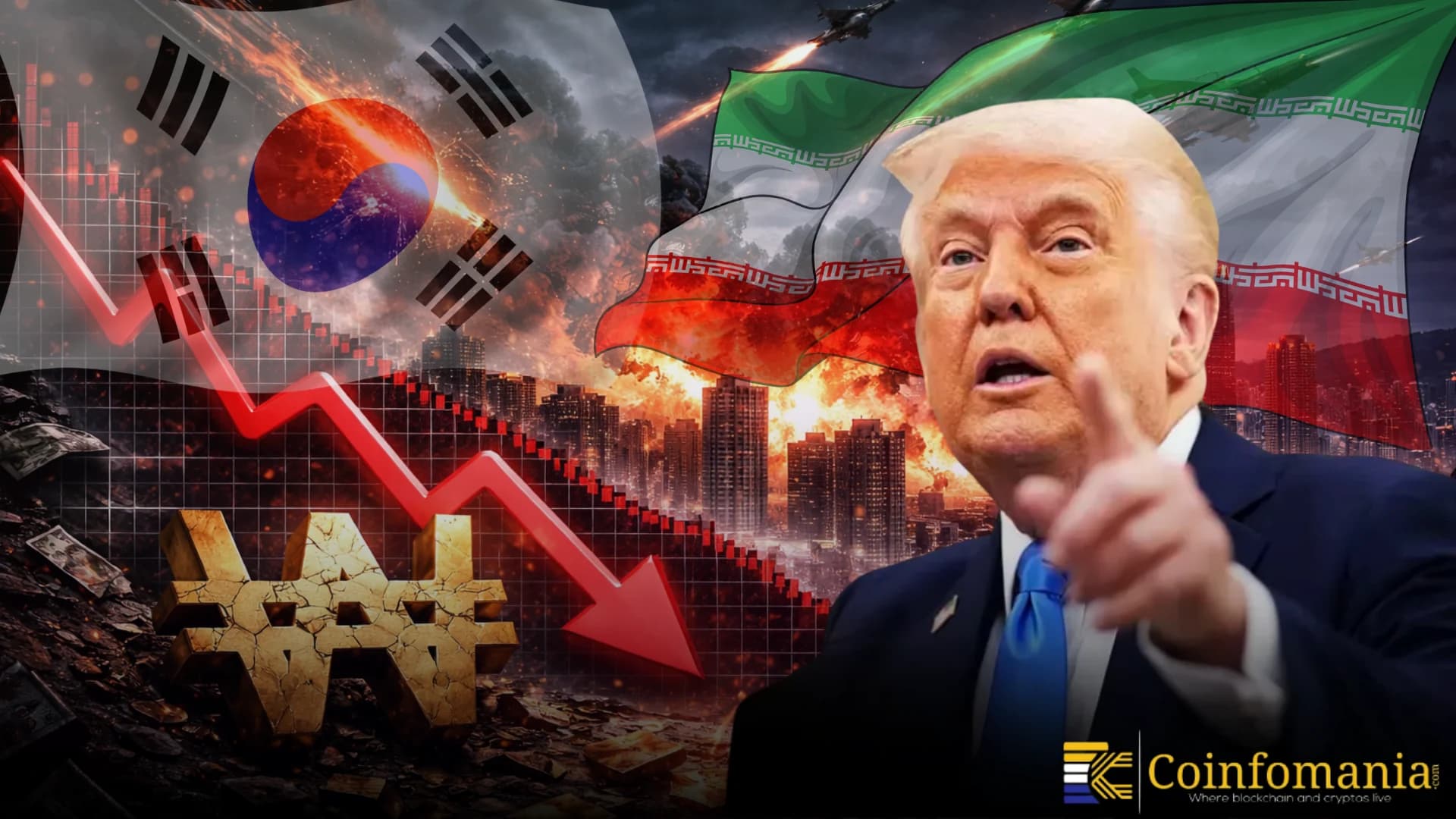
Trump’s Iran Strikes Wipe ₩202 Trillion from Korea

₩202 trillion wiped from South Korea’s stock market as US-Iran tensions rise, triggering oil supply fears and global market volatility.
Quick Take
Summary is AI generated, newsroom reviewed.
₩202 trillion wiped out from Korean stock market
Strait of Hormuz closure fears impacting oil supply
Asian economies highly vulnerable to energy shocks
Global markets reacting to geopolitical uncertainty
JUST IN: ₩202 trillion wiped out from the Korean stock market today as Trump says the US will strike Iran for 2–3 more weeks, keeping the Strait of Hormuz closed and threatening Asian oil supply pic.twitter.com/72XAPrBHKB
— crypto.news (@cryptodotnews) April 2, 2026
South Korea’s stock market suffered a sharp decline, with approximately ₩202 trillion (around $150 billion) erased in a single session. The benchmark KOSPI dropped significantly as panic selling spread across sectors. Major companies recorded steep losses, including Samsung Electronics, which fell by around 5–6%. The sell-off remained broad-based, signaling systemic pressure rather than isolated weakness.
Geopolitical Tensions Drive the Sell-Off
Escalating conflict involving the United States and Iran triggered the market reaction. Reports suggest that military actions could extend for weeks, increasing uncertainty. Concerns have also grown around the potential closure of the Strait of Hormuz, a critical route for global oil transport. Any disruption in this region directly threatens energy supply, prompting immediate reactions from financial markets.
Why Asia Is Especially Vulnerable
Countries like South Korea rely heavily on imported energy, making them particularly sensitive to oil price shocks. Rising energy costs increase production expenses, reduce consumer spending power, and slow economic growth. As a result, Asian markets often react more sharply to geopolitical and energy-related disruptions, as seen in the current downturn.
Oil Shock and Inflation Fears
Fears of supply disruption have pushed oil prices higher, creating inflationary pressure across global economies. Higher energy costs affect transportation, manufacturing, and daily consumption. Central banks may need to adjust monetary policies in response, adding another layer of uncertainty. Investors typically respond to such conditions by reducing exposure to risk assets.
Impact on Global Markets
The effects extend beyond South Korea. Global markets, including equities, commodities, and crypto, are reacting to the heightened uncertainty. Assets like Bitcoin may experience increased volatility during such periods. Investors often rotate capital into safer assets, reducing liquidity in higher-risk markets and amplifying price swings.
The Bigger Picture
This event underscores the interconnected nature of global financial systems. A geopolitical escalation in one region can trigger widespread economic consequences. Energy markets play a central role, and any disruption in oil supply quickly impacts multiple asset classes—from stocks to cryptocurrencies. Market direction will depend on how the geopolitical situation evolves. Further escalation could lead to continued declines, while signs of de-escalation may support recovery. For now, volatility remains elevated, and investors continue to monitor developments closely.
References


Follow us on Google News
Get the latest crypto insights and updates.