Tokenization Could Bring Markets to Wallets, Says BlackRock CEO

Tokenization is reshaping finance, with BlackRock’s Larry Fink highlighting digital wallets as future investment hubs.
Quick Take
Summary is AI generated, newsroom reviewed.
Tokenization could allow investors to buy fractional shares through digital wallets.
BlackRock CEO Larry Fink compares tokenization to the internet’s financial impact.
The firm already holds around $150 billion in digital asset exposure.
Regulatory uncertainty remains a key challenge for global adoption.
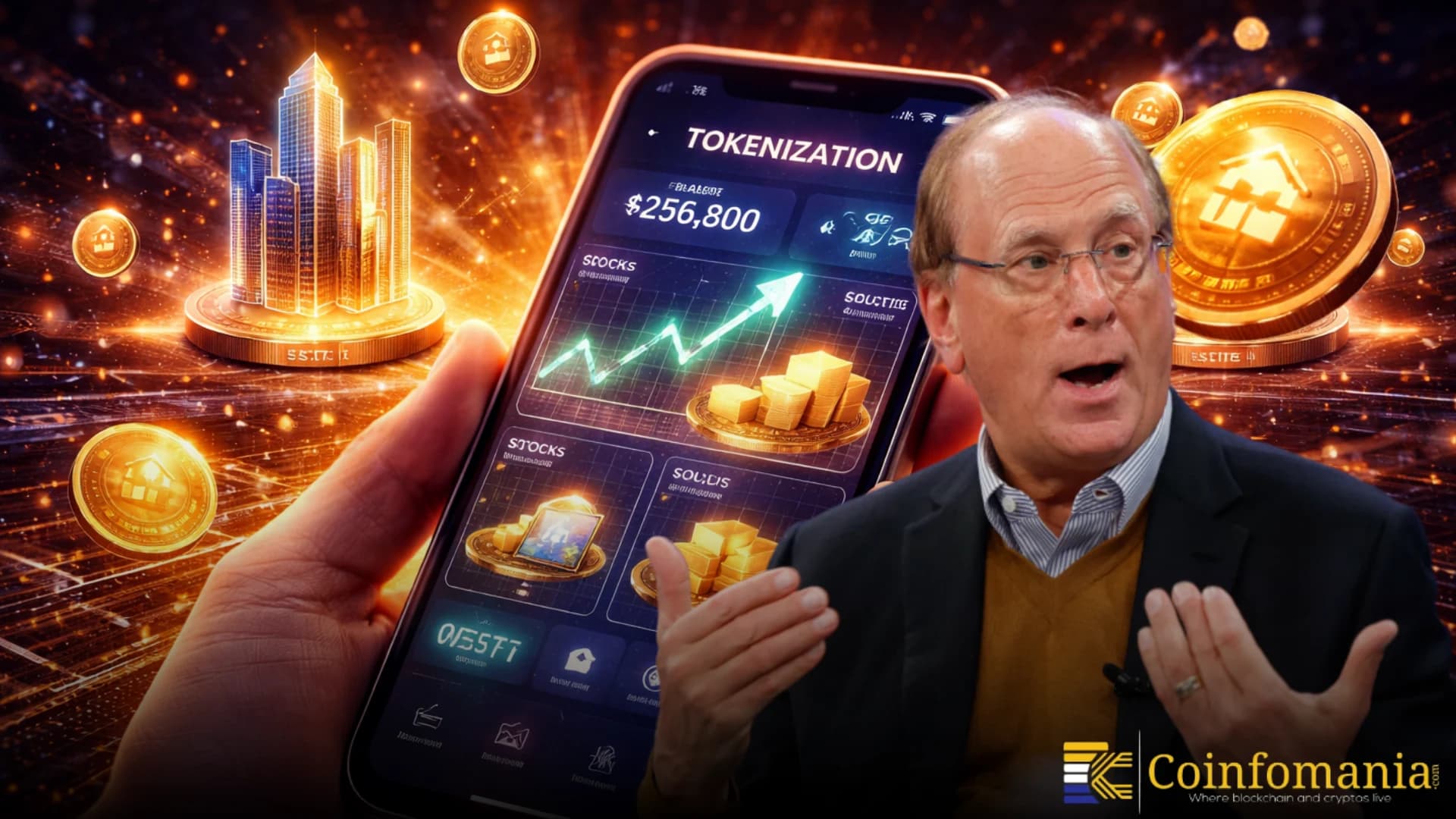
In his 2026 annual letter, Larry Fink, CEO of BlackRock, shared a clear vision for the future of finance. He believes tokenization could soon change how people invest. His idea is simple but powerful. A digital wallet may one day do much more than store money. It could also give users direct access to global markets.
Tokenization Could Bring Investing to Everyone
Tokenization refers to turning real-world assets into digital tokens on a blockchain. These assets can include stocks, bonds, or even real estate. As a result, people can buy small portions instead of full assets. This lowers the barrier to entry for many investors.
Fink compared this shift to the rise of the internet in the 1990s. Back then, digital tools made information more accessible. Now, tokenization could do the same for finance. Instead of relying on brokers, users could invest directly through apps. This would make investing faster and more convenient.
Tokenization Gains Momentum at BlackRock
BlackRock is already moving in this direction. The firm manages around $150 billion in digital asset-related investments. This shows strong confidence in tokenization and blockchain technology.
Moreover, tokenization can reduce the need for middlemen. Transactions could become quicker and cheaper. In addition, markets may become more transparent. These benefits are attracting both institutions and retail investors.
At the same time, tokenization may connect traditional finance with crypto systems. This could create a more unified financial environment. As adoption grows, more firms may follow BlackRock’s lead.
Opportunities Grow, But Challenges Remain
Despite the excitement, challenges still exist. Regulation is one of the biggest concerns. Different countries have different rules, which creates uncertainty. This may slow down the global adoption of tokenization. Investors and companies alike must navigate a complex web of compliance requirements, which can be costly and time-consuming.
Community reactions reflect this mixed outlook. Many people are excited about easier access to investments and the potential for broader financial inclusion. However, others worry about safety, fraud risks, and legal clarity. Ensuring robust security measures, clear regulations, and investor protection will be essential for tokenization to reach its full potential. Only with these safeguards can long-term growth and mainstream adoption be achieved.
A New Era for Digital Finance
Fink’s message highlights a major shift in finance. Tokenization is not just a trend. It may reshape how people invest and build wealth. By bringing assets into digital wallets, it could open doors for millions. Everyday users could gain access to investment opportunities that were previously reserved for wealthy or institutional investors, creating a more level playing field.
As companies like BlackRock continue to invest in this space, change seems likely. The gap between traditional finance and blockchain is closing. If tokenization succeeds, investing could become simpler, faster, and more inclusive. In addition, it could foster innovation in financial products, encourage global participation, and make wealth creation a more attainable goal for everyone.


Follow us on Google News
Get the latest crypto insights and updates.