Japan’s Top 3 Banks Get OpenAI Access to Fight Cyberattacks

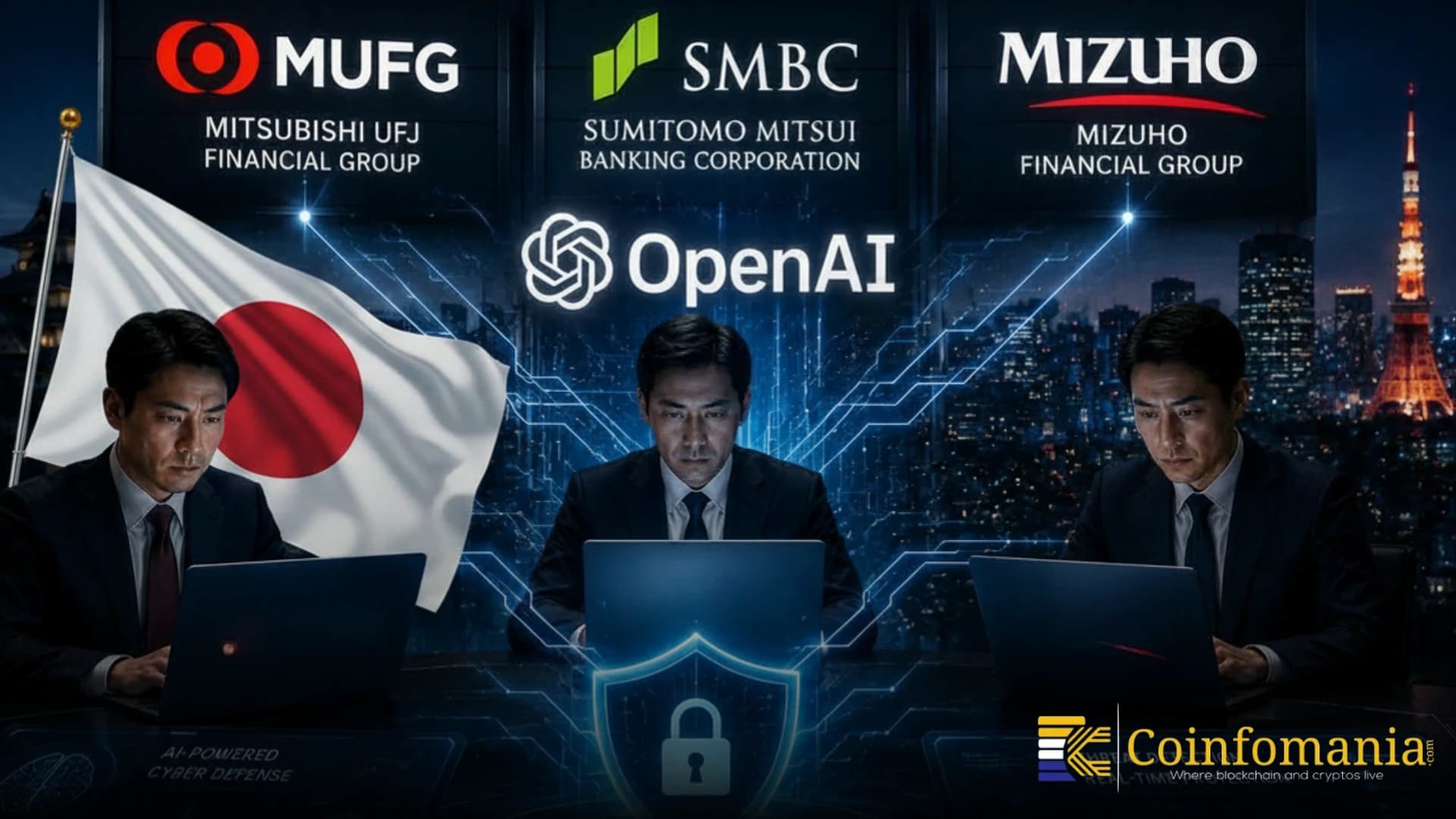
Japan's top three banking giants MUFG, SMBC, and Mizuho adopt OpenAI's newest AI models to strengthen their cybersecurity threat detection.
Quick Take
Summary is AI generated, newsroom reviewed.
Mitsubishi UFJ, Sumitomo Mitsui, and Mizuho Bank will use OpenAI tools to identify suspicious network behaviors.
The banking trio previously expanded their multi-model security infrastructure by adopting Anthropic's platform.
MUFG is also launching a natural-language ChatGPT integration with Moneytree for retail personal finance management.
The technology upgrade comes as potential June interest rate hikes by the Bank of Japan threaten global market liquidity.
Japan’s largest banks are accelerating their adoption of artificial intelligence as cyber threats grow more sophisticated. According to reports from Nikkei, Mitsubishi UFJ Financial Group (MUFG), Sumitomo Mitsui Banking Corporation (SMBC) and Mizuho Bank are set to gain access to OpenAI’s latest AI model. It aims to strengthen cybersecurity defenses and improve threat detection capabilities.
LATEST: Japan’s three largest banks — MUFG, Sumitomo Mitsui, and Mizuho — are set to gain access to OpenAI’s latest AI model to help defend against cyberattacks, per Nikkei.
— The Crypto Times (@CryptoTimes_io) May 29, 2026
The move signals growing adoption of advanced AI by major financial institutions for cybersecurity and… pic.twitter.com/T3tBzPIb0W
The move marks another major step in Japan’s AI strategy. This highlights how financial institutions are increasingly turning to advanced technology to protect critical infrastructure. The development is already generating attention across OpenAI news today as banks race to stay ahead of evolving cyber risks.
Japan’s Biggest Banks Expand AI Adoption
The three banking giants already rank among the most influential financial institutions in Asia. Their decision to adopt OpenAI’s newest model reflects growing confidence in AI-powered cybersecurity tools. According to reports, the model will help identify suspicious behavior, analyze threats and strengthen defenses. Against increasingly complex cyberattacks.
The initiative follows the banks’ earlier adoption of advanced AI systems. It includes access to Anthropic’s Claude Mythos platform earlier this month. The latest development shows that Japanese financial institutions are no longer experimenting with AI. Instead, they are integrating multiple frontier models into their security and operational infrastructure.
Why Cybersecurity Has Become a Priority
Cyberattacks against financial institutions continue to increase globally. Banks face constant threats ranging from phishing campaigns and ransomware attacks to sophisticated state-sponsored hacking attempts.
AI models can assist security teams by:
- Detecting unusual network activity faster
- Identifying emerging threat patterns
- Automating portions of incident response
- Reducing response times during active attacks
For institutions handling trillions of dollars in assets, even small improvements in threat detection can have significant consequences. The decision has therefore become one of the most discussed developments in recent cybersecurity news. Particularly as financial firms seek new ways to protect customer data and payment systems.
MUFG Expands Beyond Security Applications
The OpenAI partnership is not limited to cybersecurity. MUFG recently announced a separate initiative involving its retail banking operations and Moneytree, a financial technology subsidiary. The project integrates financial services into ChatGPT through OpenAI’s application ecosystem. Customers can check account balances, review spending habits and manage personal finances using natural language conversations. This broader strategy suggests that Japan AI banking initiatives are moving beyond internal operations. It is beginning to influence customer facing services as well.
What This Means for Crypto and Financial Markets
The timing is notable. Former Bank of Japan board member Makoto Sakurai recently suggested the central bank could raise interest rates in June. If that happens, a stronger yen could tighten global liquidity and create pressure on risk assets, including Bitcoin. While major financial institutions are investing heavily in AI infrastructure. Together, these developments highlight how technology and monetary policy are becoming increasingly interconnected. Meanwhile, Binance founder Changpeng Zhao recently argued that AI will continue growing rapidly. Even though many AI startups may eventually fail as competition intensifies.
The Bigger Picture for Japan’s Financial Sector
The decision by MUFG, SMBC and Mizuho to adopt OpenAI’s latest model signals a broader shift in the banking industry. Rather than viewing AI as an experimental technology. The leading institutions now see it as a critical component of cybersecurity, operations and customer services. For investors, developers and financial firms, the announcement reinforces Japan’s position as one of the most active markets for AI adoption. As cyber threats evolve and digital finance expands. The advanced AI systems are likely to play an increasingly important role in protecting the global financial system.


Follow us on Google News
Get the latest crypto insights and updates.