Pi Founder Fan Addresses Token Design at Consensus 2026 Miami

Pi Network co-founder Dr. Chengdiao Fan critiques speculative token models at Consensus 2026. Explore Pi's AI and utility-led growth.
Quick Take
Summary is AI generated, newsroom reviewed.
Dr. Chengdiao Fan argued at Consensus 2026 that tokens must shift from capital-raising tools to foundations for real products and users.
Pi Network is positioning its 18 million KYC-verified members as critical infrastructure for authentic human interaction in the AI era.
The project seeks to address global financial literacy and human economic participation through its massive distributed network.
Protocol 23 is set to activate smart contracts in mid-May 2026, allowing developers to build DeFi apps for Pi's 60 million engaged users.
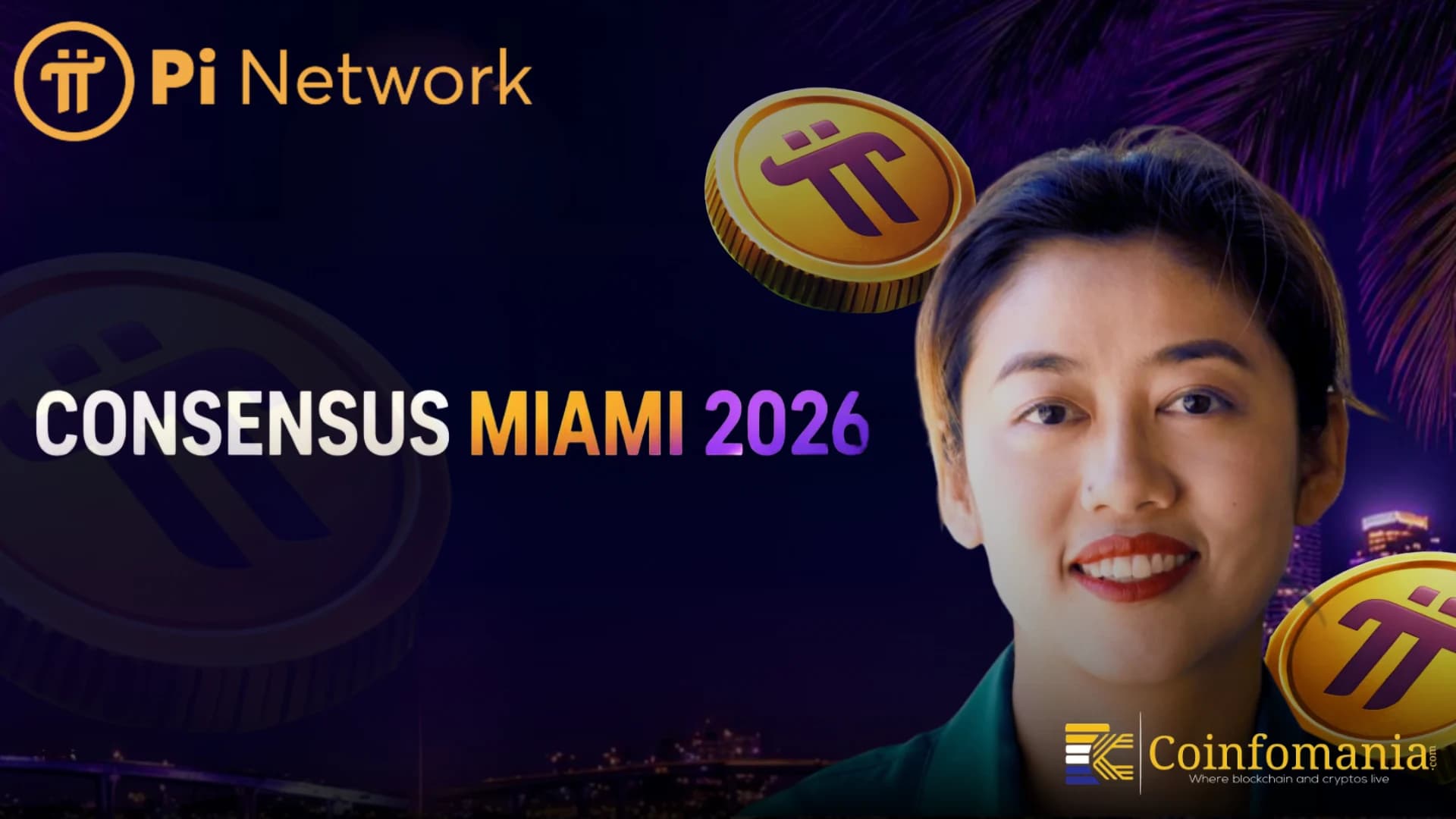
Most crypto tokens were never really about utility. Pi Network co-founder Dr. Chengdiao Fan made that point clearly at Consensus 2026 Miami during her session titled “Aligning Web3, AI, and Blockchain for Utility.” Her talk challenged one of the industry’s most persistent habits. Pi is using tokens primarily as capital-raising tools rather than building them around real products and real users. For Pi Network price 2026 watchers and ecosystem followers, this was one of the most substantive public addresses the project has delivered.
The Problem With Token Design in Crypto
Dr. Fan opened by revisiting a theme Pi has been building toward for years. “We utilize critical tools, including payment capabilities, the ability to issue tokens, and smart contracts, and align these elements with innovations designed to address the problem of quick access,” she said.
The full video of Dr. Fan Chengdiao, founder of the #PiNetwork, giving a keynote speech at Consensus 2026 yesterday, with small Chinese subtitles.🚀From token design to the imminent launch of its ecosystem, from its Web3 to its AI-era strategy, Pi has taken every step with… pic.twitter.com/DXW7rpPYAP
— PiNetwork DEX⚡️阿龙 (@PiNetworkAL) May 7, 2026
The critique was pointed but fair. Too many projects in crypto have treated token launches as exits rather than foundations. Pi’s approach inverts that logic entirely. Tokens, in Pi’s framework, exist to acquire real users, reward genuine engagement, and feed directly back into product development cycles.
Pi’s Launchpad mechanism reflects this philosophy practically. Instead of listing tokens speculatively, Pi routes them through products that require working experience, real user feedback, and accountability built into the launch structure itself.
Why Human Scale Matters More Than Ever
The Consensus Miami 2026 session landed at a critical moment for the broader AI conversation. As Dr. Fan noted, AI is rapidly lowering the barrier to building products. That shift makes one resource increasingly scarce and valuable: authentic human participation at scale.
Pi’s answer to that challenge is its network. Over 60 million engaged users. More than 18 million KYC-verified members. Over 1 million validators. Additionally, 526 million volunteer hours contributed to the ecosystem. That is not a marketing figure. In the AI era, verified human networks represent genuine training data and authentic interaction records. With a trusted identity infrastructure that no synthetic dataset can replicate.
Three Problems Pi Is Building Toward
Dr. Fan outlined three macro challenges she believes Pi is positioned to address. First, human economic participation. Shifting from wage-based labor models toward ownership, creativity, and financial asset participation. Second, financial literacy. Using Pi’s infrastructure to improve economic understanding globally in systematic ways. Third, the socioeconomic structure of society itself. It uses blockchain to define new financial models that work for individuals and organizations beyond traditional institutional frameworks. She closed with a direct invitation. “We invite you to build on top of Pi to solve these fundamental problems of our society for years to come.”
What This Means for Investors and Developers
For Pi Network price 2026 observers, the Consensus Miami 2026 appearance signals a project moving from infrastructure building toward ecosystem activation. Protocol 23 smart contracts are scheduled for mid-May 2026, opening Pi’s layer-1 blockchain to DeFi applications for the first time. For developers, Dr. Fan’s talk was effectively a public call to build. A verified user base of 18 million KYC identities and 60 million engaged participants is a distribution advantage that most new blockchain projects spend years trying to manufacture.
References


Follow us on Google News
Get the latest crypto insights and updates.