Pi Network Uses Staking to Help Apps Reach 60M Pioneers
Pi Network delivers a visual redesign to its Ecosystem Directory Staking protocol to accelerate utility-based app discovery for 60M users.

Quick Take
Summary is AI generated, newsroom reviewed.
The visual application refresh streamlines on-chain Mainnet token staking parameters via the Pi Browser interface.
Pioneers lock specific asset balances to dynamically shift directory exposure rankings instead of relying on Web2 metrics.
Community curation drove 3.19 million staked tokens into portfolio project CiDi Games, capturing 1.2 million initial plays.
The application promotion mechanism functions without offering network-level interest yields to protect baseline protocol neutrality.
Pi Network is doubling down on ecosystem growth with a refreshed version of its Ecosystem Directory Staking feature. A tool designed to help developers gain visibility across the platform’s community of more than 60 million users.
The update aims to make app discovery easier while giving developers, creators, and businesses a direct way to promote their projects inside the Pi ecosystem. According to the Pi Core Team, the feature has received a redesigned interface and improved user experience ahead of the network’s broader ecosystem expansion efforts.
How Ecosystem Directory Staking Works
The Pi Network ecosystem directory staking system allows users and businesses to stake PI tokens in support of applications listed in the Pi Browser’s Ecosystem Interface. Rather than rewarding users with additional tokens, the staking mechanism boosts an app’s ranking and visibility within the directory. Higher rankings can translate into more impressions, increased downloads, and stronger user engagement.
Pi says the feature creates a more meaningful review system compared to traditional Web2 app stores. Because community support is backed by actual economic participation rather than simple ratings or comments.
CiDi Games Shows Early Results
The company highlighted CiDi Games as an example of the feature’s potential. According to Pi Network, the game‘s ranking received support from more than 3.19 million staked PI within its first week of launch. That increased visibility reportedly helped generate more than 1.2 million game plays during the same period. The results suggest staking may serve as an effective user-acquisition tool for developers building within the Pi ecosystem. The updated system also arrives as interest grows around the Pi Network app studio launch. This allows creators and “vibe coders” to build applications using AI-assisted tools.
Ecosystem Growth Remains Key Focus
Pi Network believes staking can become increasingly important as AI tools make app creation easier but competition for user attention more difficult. By connecting developers to millions of engaged users, the company hopes to create a self-sustaining ecosystem. Their applications can gain traction without relying entirely on traditional advertising channels. The update also follows recent node upgrades and preparations for Pi2Day on June 28, events many community members view as important milestones for ecosystem development.
Price Outlook Remains Mixed
At the time of writing, pi network price 2026 discussions remain focused on balancing ecosystem growth against ongoing token unlocks. PI traded around $0.136, posting modest gains over the past 24 hours.\
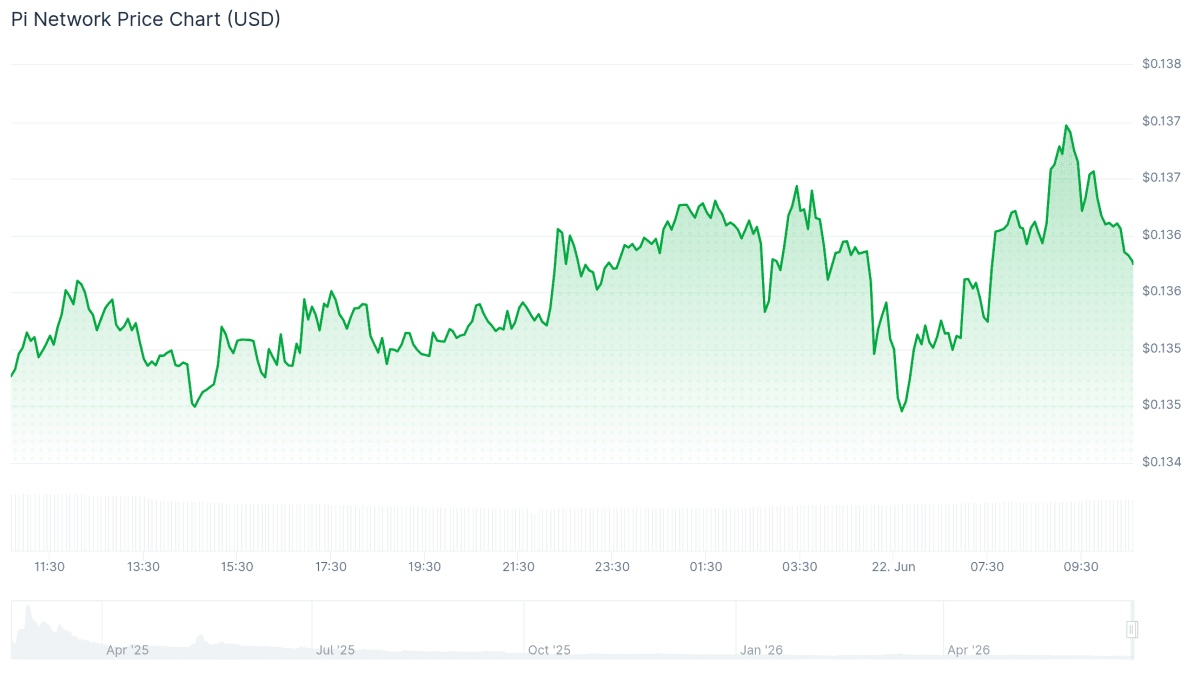
Pi Network Price Chart (USD) June 22, 2026. Source: CoinGecko
While protocol upgrades, ecosystem expansion, and staking adoption could support long-term utility. Analysts continue to monitor token supply growth and market demand as key factors influencing Pi’s future trajectory.


Follow us on Google News
Get the latest crypto insights and updates.
Related Posts

SpaceX Gets Lowest MSCI ESG Rating Despite $2.4T Market Cap

Shweta Chakrawarty
Author

Inside Morgan Stanley’s Proposed ETH and SOL Fees — What It Means

Triparna Baishnab
Author

Swedish Krona Stablecoin Launches Amid Concerns Over Dollar Dominance
Triparna Baishnab
Author