Senate Drops 309-Page Clarity Act Draft — Vote Comes Thursday

Senate Banking Committee marks up the 309-page CLARITY Act on May 14. Bipartisan momentum grows as Polymarket odds hit 75% for 2026 passage.
Quick Take
Summary is AI generated, newsroom reviewed.
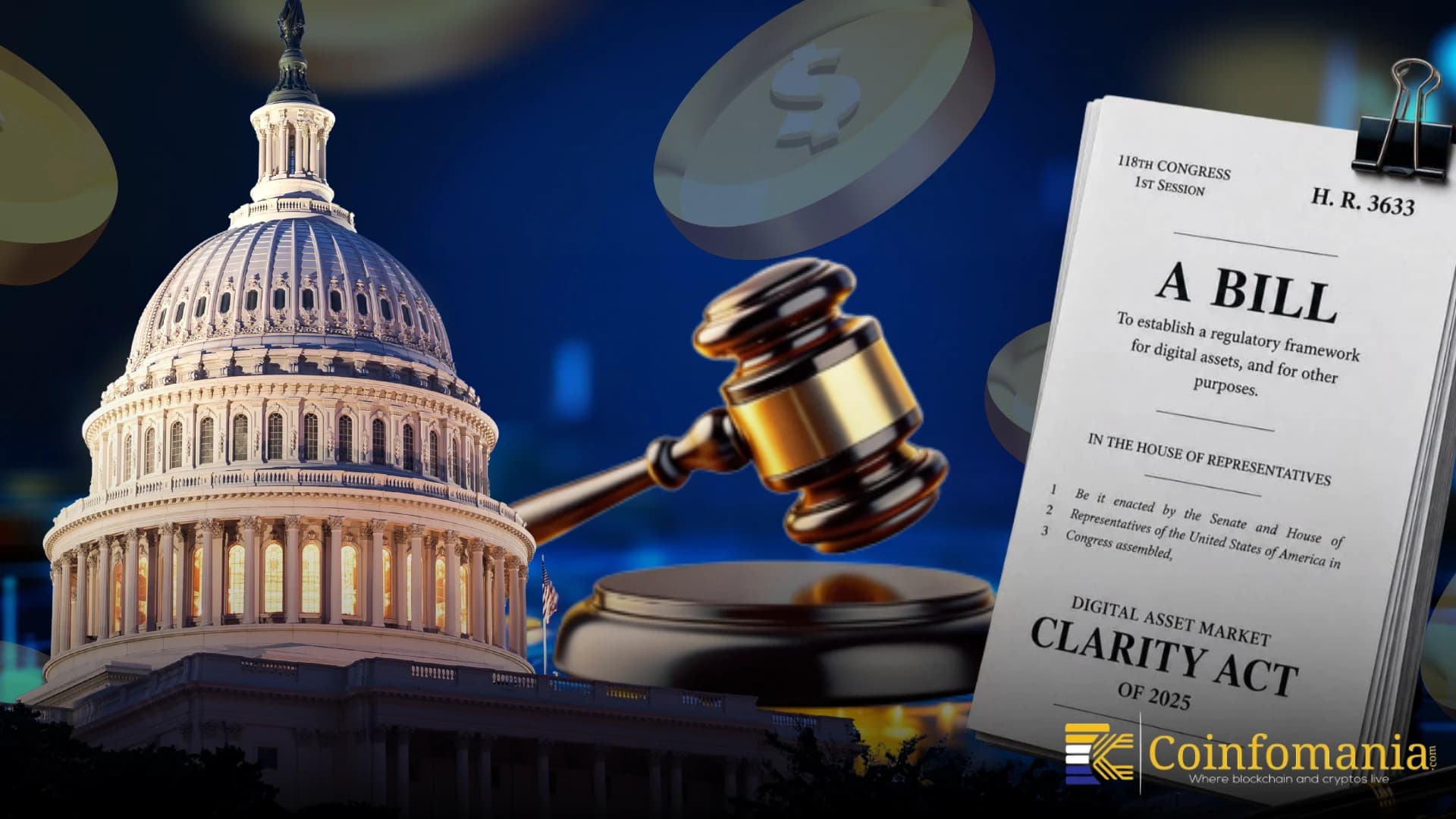
The Senate Banking Committee holds a historic markup for H.R. 3633 on Thursday, May 14, at 10:30 AM ET.
A 309-page substitute draft establishes jurisdictional lines, CFTC-SEC sandboxes, and explicit software developer protections.
Section 404 preserves activity-based stablecoin rewards while banning passive, bank-like interest to satisfy banking concerns.
Polymarket odds for the bill’s passage surged to 75%, though ethics disputes regarding politically linked tokens remain a flashpoint.
Years of regulatory uncertainty for the U.S. crypto industry could end this week. The Senate Banking Committee has released a 309-page draft of the Digital Asset Market Clarity Act. It’s a sweeping substitute for the House-passed H.R. 3633. Ahead of Thursday’s scheduled markup vote.
🚨JUST IN: The Senate Banking Committee has released the new 309-page draft of the Clarity Act it’s been working on since January.
— Eleanor Terrett (@EleanorTerrett) May 12, 2026
Committee members now have until close of business tomorrow to file amendments ahead of Thursday’s markup. pic.twitter.com/kL3IXSOdSK
Committee members have until close of business Tuesday to file amendments. Thursday’s session will mark the first-ever full committee vote on a comprehensive U.S. crypto market structure bill. The full draft is publicly available at the Senate Banking Committee’s official website.
From the House to the Senate
The House passed its version of the CLARITY Act in July 2025 with a bipartisan 294-134 vote. It’s a stronger margin than many expected. The Senate has spent months building on that foundation. It is addressing gaps around DeFi oversight, stablecoin yields, developer protections, and jurisdictional clarity between the SEC and CFTC.
The urgency behind this bill is real. For years, crypto companies in the U.S. have operated under what the industry calls “regulation by enforcement.” The agencies pursue legal action rather than establishing clear rules. The CLARITY Act is designed to end that era and position the U.S. as the world’s leading crypto regulatory framework. At the same time, protecting consumers and national security.
What the 309 Pages Actually Say
The bill’s nine titles cover the full spectrum of digital asset regulation. The most foundational element is the jurisdictional bright line. It draws a clear distinction between securities under SEC oversight and digital commodities under CFTC authority. Network tokens that pass a “mature blockchain” decentralization test qualify as digital commodities. This removes them from securities law entirely.
Title III addresses DeFi directly, establishing rulemaking frameworks for decentralized trading protocols and illicit finance obligations at the application layer. Title VI delivers what developers have been demanding for years. It provides explicit software developer protections, an NFT safe harbor, and the Blockchain Regulatory Certainty Act. Additionally, the Keep Your Coins Act protects self-custody rights.
On stablecoins, Section 404 reflects the hard-fought Tillis-Alsobrooks compromise. It prohibits passive, bank-equivalent yields on stablecoin holdings. While preserving activity-based rewards tied to real platform usage. Title VII establishes customer property protections in bankruptcy. A CFTC-SEC micro-innovation sandbox sits in Title V alongside tokenization provisions for real-world assets.
The Democratic Roadblock
The bill’s biggest obstacle is not its content; it is its ethics provisions. The draft retains sparse conflict-of-interest language, drawing sharp resistance from Senate Democrats. Senator Adam Schiff is reportedly demanding stronger provisions specifically addressing President Trump and his family’s crypto dealings. Senator Ruben Gallego has emerged as a potential swing vote but has not committed. Galaxy Digital’s Alex Thorn flagged the risk clearly. It’s a purely Republican committee vote that complicates clearing the 60-vote threshold needed on the Senate floor.
What This Means for Investors and Developers
For crypto regulation news followers, Thursday‘s markup is the clearest near-term catalyst for digital asset markets in 2026. Polymarket currently prices the CLARITY Act at 75% odds of becoming law this year. A clean bipartisan committee passage pushes that number higher and removes the regulatory overhang that has kept institutional capital cautious.
For developers, the bill’s software protections and NFT safe harbor represent legal clarity that has been entirely absent. Stand With Crypto, representing 2.9 million supporters, will publicly score every senator’s vote. With 70% of Americans supporting clear federal crypto legislation, the political pressure is real, and Thursday is where it arrives.
References


Follow us on Google News
Get the latest crypto insights and updates.